
Artificial intelligence has already reshaped marketing, finance, and customer support, but recruitment is becoming the next major frontier. By 2026, AI in recruitment is no longer an experimental tool used by progressive companies; it is a core operational layer that replaces large parts of traditional HR departments. Algorithms now screen candidates, predict performance, manage employer branding, and even make final hiring recommendations. This shift is not just about automation but about redefining how organizations identify, evaluate, and retain talent in a data-driven economy.
The transformation is happening quietly but rapidly. Many companies still present AI as an “assistant” to recruiters, yet in practice it already performs tasks that once required entire HR teams. Understanding how this change unfolds is essential for employers, recruiters, and job seekers alike.
The Evolution of AI Recruitment Software
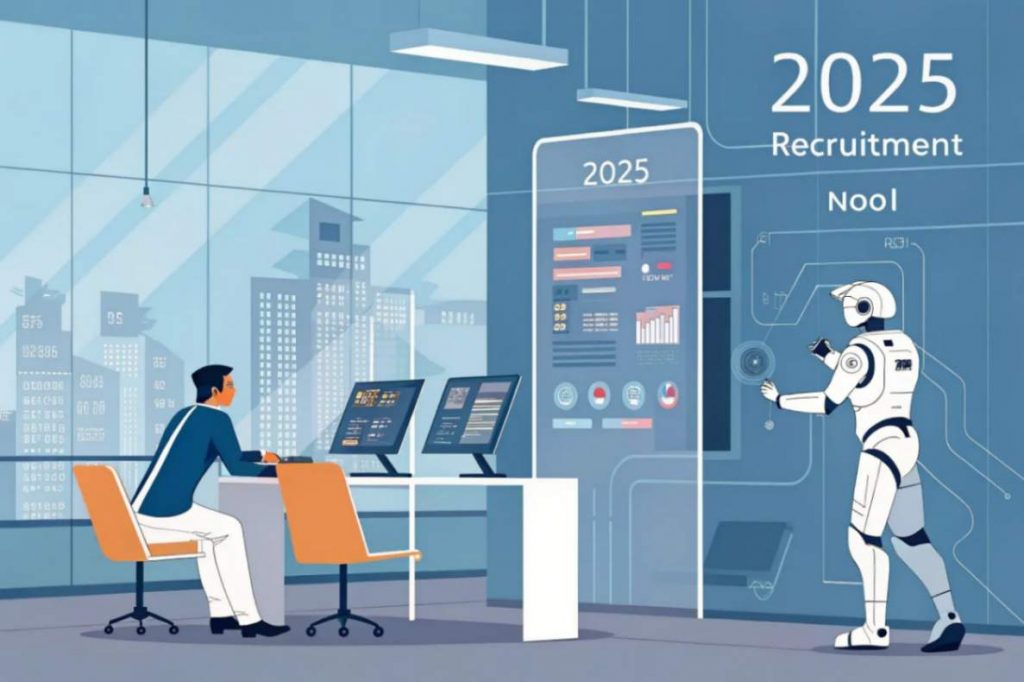
The rise of AI recruitment software did not happen overnight. Early systems focused on basic keyword matching in resumes, often leading to biased or inefficient outcomes. By 2026, machine learning models have evolved into context-aware systems capable of understanding career trajectories, skill transferability, and cultural alignment.
Modern recruitment algorithms analyze structured and unstructured data simultaneously. CVs, portfolios, GitHub repositories, video interviews, psychometric tests, and even communication styles are processed as part of a unified candidate profile. Natural language processing allows AI to interpret intent rather than rely solely on keywords, while deep learning models continuously improve based on hiring outcomes and employee performance data.
This evolution has fundamentally changed the role of HR. Instead of manually reviewing applications, HR professionals increasingly supervise AI systems, validate edge cases, and focus on strategic workforce planning. The operational core of recruitment is now driven by algorithms that operate faster, cheaper, and with greater consistency than human teams.
How Algorithms Screen and Rank Candidates at Scale
One of the most disruptive aspects of AI in recruitment is automated candidate screening. In 2026, companies routinely receive tens of thousands of applications for a single role. Manual screening is no longer viable, and algorithms handle this volume effortlessly.
AI-driven applicant tracking systems score candidates across multiple dimensions, including technical skills, soft skills, experience relevance, learning ability, and predicted job performance. These scores are dynamic rather than static, adapting to changing job requirements and company goals. Importantly, advanced systems no longer rely on rigid filters that exclude non-traditional candidates. Instead, they model success patterns based on high-performing employees within the organization.
At the midpoint of the hiring pipeline, recruiters often interact with ranked shortlists generated entirely by AI. At this stage, the algorithm has already removed unsuitable candidates, identified high-potential profiles, and flagged unconventional applicants who may outperform expectations.
Within this process, one structured element is especially important for understanding how AI evaluates talent:
Before moving further, it helps to look at how traditional HR screening compares to AI-based recruitment systems in 2026.
| Aspect | Traditional HR Screening | AI-Driven Recruitment 2026 |
|---|---|---|
| Application volume handling | Limited by human capacity | Virtually unlimited |
| Evaluation criteria | Subjective and inconsistent | Data-driven and standardized |
| Bias control | Dependent on recruiter awareness | Continuously audited algorithms |
| Speed of screening | Days or weeks | Minutes or hours |
| Adaptability to role changes | Slow and manual | Real-time model updates |
This comparison highlights why many organizations are reducing or fully eliminating manual screening roles. AI does not get tired, does not overlook strong candidates due to volume, and can adjust instantly to evolving hiring priorities. After the table, it becomes clear that screening is no longer a human-centric process but a computational one.
Predictive Hiring and Workforce Analytics
Beyond screening, AI recruitment platforms in 2026 excel at predictive hiring. Algorithms no longer focus solely on who fits a role today but on who will succeed in the future. Predictive models analyze historical employee data, promotion timelines, attrition rates, and performance metrics to forecast long-term outcomes.
These systems answer questions that traditional HR departments struggled with for decades. Which candidates are likely to stay beyond two years? Who will adapt best to organizational change? Which skills will become critical as the business scales? By integrating recruitment with workforce analytics, AI enables proactive hiring strategies rather than reactive ones.
In the middle of this analytical layer, a single structured list helps clarify what AI evaluates most effectively:
To understand the predictive power of AI in recruitment, consider the core factors modern algorithms analyze when forecasting candidate success:
- Career progression patterns rather than job titles alone.
- Skill adjacency and learning velocity across industries.
- Behavioral signals from assessments and interviews.
- Team compatibility based on collaboration data.
- Retention probability derived from comparable employee profiles.
This list illustrates that predictive hiring is not about replacing human intuition but surpassing its limits. After evaluating these factors, AI systems generate recommendations that align recruitment decisions with long-term business strategy, reducing costly turnover and misaligned hires.
AI Interviews and Automated Candidate Assessment
Interviewing has traditionally been one of the most human-centric aspects of recruitment. By 2026, this area has undergone a profound transformation. AI-powered interview platforms conduct asynchronous video interviews, analyze speech patterns, facial expressions, response structure, and even micro-pauses to assess confidence and clarity.
While early versions of these tools raised ethical concerns, modern systems emphasize transparency and fairness. Candidates are informed about evaluation criteria, and models are trained to avoid demographic bias. Importantly, AI interviews focus less on superficial traits and more on communication effectiveness, problem-solving approaches, and situational reasoning.
Automated assessments extend beyond interviews. Coding challenges, case studies, and simulations are dynamically adjusted to candidate skill levels, ensuring more accurate evaluations. The result is a hiring process where every candidate is assessed under comparable conditions, something that traditional HR teams struggled to guarantee consistently.
Ethical Challenges and Algorithmic Governance
As AI replaces HR functions, ethical oversight becomes critical. Recruitment algorithms shape careers, income opportunities, and social mobility. In 2026, responsible companies recognize that replacing HR departments without governance frameworks creates significant risk.
Algorithmic transparency, explainability, and bias audits are now integral to AI recruitment systems. Regulators in many regions require companies to document how hiring algorithms function and how decisions can be challenged. Internal ethics committees often replace traditional HR compliance roles, focusing on system validation rather than individual hiring decisions.
Despite concerns, AI has also improved fairness in recruitment when implemented correctly. By removing subjective human judgments influenced by unconscious bias, algorithms can promote merit-based hiring at scale. However, this benefit depends entirely on data quality and governance discipline. Poorly trained models can amplify historical inequalities, making ethical design non-negotiable.
The Future of HR Roles in an Algorithm-Driven Market
The replacement of HR departments does not mean the disappearance of HR expertise. Instead, roles are being redefined. By 2026, successful organizations employ fewer recruiters but more HR technologists, data analysts, and organizational strategists.
Human oversight shifts toward system design, policy development, and candidate experience optimization. HR professionals focus on interpreting AI insights, managing employer branding, and ensuring alignment between corporate culture and algorithmic decision-making. In many cases, HR becomes a strategic advisory function rather than an operational one.
For job seekers, this shift requires adaptation. Understanding how AI evaluates profiles, structuring resumes for machine readability, and demonstrating continuous learning become essential skills. Recruitment is no longer a conversation with a person but an interaction with a system that values evidence, consistency, and potential over persuasion.
Conclusion
By 2026, AI in recruitment has moved beyond assistance into replacement. Algorithms now perform the core functions once handled by HR departments, from screening and interviewing to predictive hiring and workforce planning. This transformation offers efficiency, scalability, and strategic clarity, but it also demands strong ethical governance and new professional competencies.
The future of recruitment is not about removing humans from decision-making entirely. It is about redefining where human judgment adds value and where algorithms perform better. Organizations that understand this balance will attract stronger talent, reduce hiring risks, and remain competitive in an increasingly automated labor market.